
From Participants to Consultants: What Happens When Young People Lead?
"Young people do not need to be given a voice. They need meaningful opportunities to use it." - Kianu Glasgow
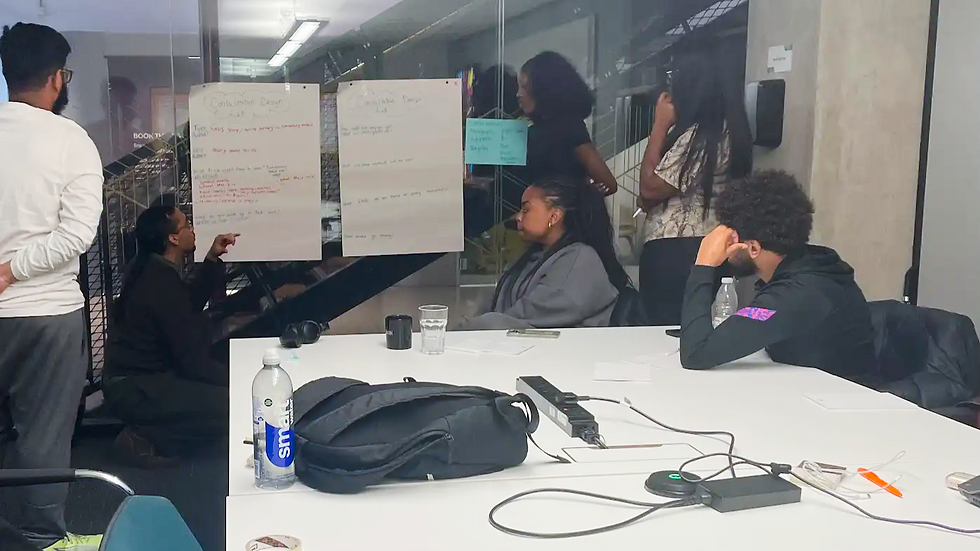
There was a moment towards the end of The WAKEYouth Engagement Pilot project that I’ll remember for a long time. I watched a group of young people debate consultation questions, refine creative activities, allocate facilitation roles and challenge one another’s ideas. They weren’t waiting for direction or approval; they were making decisions together and preparing to lead a consultation they had designed themselves.
Just a few weeks earlier, some had told us they lacked confidence speaking in groups. Others admitted they were nervous about sharing their opinions, or weren’t entirely sure what youth consultation or co‑design even meant. That shift from participants to consultants is what this project was really about.

Beginning with curiosity, not answers
When DICE CIC partnered with Foundation for Future London (FFL) to support the youth engagement strand of The WAKE youth consultation, our role wasn’t simply to deliver workshops. We wanted young people to understand the project, build confidence with one another, and take ownership of how they engage their peers.
Wondering what the wake is? The WAKE is a new public artwork in London commemorating the victims of the Transatlantic slave trade. The WAKE explores histories, remembrance and storytelling; topics that can sometimes feel distant or difficult to connect with. Rather than assuming we knew the best way to engage young people, we started with a different question: "What happens when young people design the engagement themselves?" That became the starting point for the project.
Building trust before building ideas
Before we could ask the group to consult with others, we needed to create a space where they felt comfortable listening, questioning, and building ideas together.
Across the five workshops, we adapted as we went. We simplified language when it felt inaccessible, introduced more creative activities when conversations became difficult, created opportunities for smaller group discussions and regularly checked that they felt heard and supported.
Every workshop evolved because of the young people in the room. Looking back, that’s one of the biggest lessons from this project: Meaningful youth engagement rarely starts by asking for ideas. It starts with creating an environment where people feel safe enough to share them.

Co-design is a mindset, not a method
Co-design has become something of a buzzword, but this project reminded me that genuine co-design is not a single workshop or activity; it’s a way of working. It means being prepared to adapt, recognising that the best ideas won’t always come from the facilitator, and creating enough trust for young people to challenge your thinking as well as contribute their own.
Throughout the programme, the group reshaped the consultation in ways we couldn’t have predicted. They introduced more storytelling and creative engagement, simplified how The WAKE would be explained and designed activities around how they wanted to communicate with other young people.
They stopped asking, “What questions should we ask?” , and started asking, “How do we make people feel comfortable enough to answer them?” They were no longer just contributing ideas; they were beginning to think and act like consultants.

From participants to consultants
If I had to identify a turning point, it wasn’t when the consultation plan was finalised, or the venue confirmed. At some point, without anyone really noticing, we stopped referring to the group as participants. They became The WAKE Youth Consultancy Team.
It wasn’t just a change of name. By the final workshops, they were discussing facilitation techniques, considering accessibility, planning communications, assigning roles and thinking carefully about how every participant would experience the consultation.They weren’t asking us what to do next. They were asking each other.
As a facilitator, that’s one of the most rewarding things to see. It means you can step back and let them lead.
Creativity creates connection
One message remained consistent throughout the project: young people wanted the consultation to feel creative, interactive and relevant. Instead of relying on traditional questions and answers, they created opportunities for people to contribute through storytelling, mood boards, collage, discussion and visual prompts.
That mattered because people engage and communicate differently. Not everyone feels confident speaking in front of a group, but many feel more comfortable expressing themselves through images, writing or creative activities. We often ask young people to “share their thoughts”. This project was a useful reminder that sometimes the best conversations happen when people aren’t under pressure to find the perfect words.
"Creativity often opens doors that conversation alone cannot."
Watching young people lead
By the time of the consultation event, my role had changed. Instead of facilitating activities, I could step back and observe. The consultation they delivered wasn’t exactly the one we imagined during Workshop One. It was better because it belonged to them.
Watching that unfold reminded me that confidence isn’t built through presentations or PowerPoint slides. It grows through experience, responsibility, trust, and genuine opportunities to lead.
What I’ll take away
This project has reinforced something that continues to shape my work: young people don’t need adults to have all the answers. They need adults who can create opportunities for them to find on their own.
When we invest time in trust and genuine ownership, young people stop waiting to be asked and start leading. And for me, that is the real legacy of The WAKE. Not just the consultation or the recommendations that will shape the project’s future, but the confidence, leadership and relationships that developed along the way.

As the programme came to a close, we asked the Youth Consultancy Team to reflect on their experience of working with DICE CIC. One young person described DICE as a “Comfortable, welcoming and inclusive environment that encouraged me to share my ideas.”
Others talked about feeling “Motivated and supported throughout the project.” They described the workshops as “Engaging” and “encouraging”. For me, that matters.
Before young people can become leaders, facilitators or consultants, they need to feel that they belong. Perhaps, then, the question isn’t simply "How do we engage young people?"
it’s "How do we create environments where young people can lead?"
Because when we get that right, we don’t just listen to young people; we give them the opportunity to show what they can do.

The Wake Youth Engagement Pilot was a three-month project delivered by Foundation for Future London in partnership with the Mayor of London and supported by DICE CIC and FFL Youth Ambassador Kianu Glasgow.


Comments